
The Short Answer
A garage door is usually the single largest opening in a home's exterior wall, and it's built lighter than the wall around it. When wind pushes against a house during a storm, a door that buckles or blows in lets that pressure rush inside, pushing up on the roof and outward on the walls from the inside. That's why garage doors fail first in high wind events, and why checking yours now — while we're still in storm season — matters more than almost any other home maintenance task on your list this month.
Why the Garage Door Takes the Hit First
Every other opening in a typical home — windows, entry doors — is small and braced on all four sides by framing. A garage door spans a much wider opening, usually 9 to 16 feet across, and depends on its own panels, tracks, and springs to hold shape under pressure instead of a solid wall. Add Central Florida's wind-load rules into the mix, and it's clear why doors rated for everyday use aren't automatically rated for storm-force gusts. If the door you have was installed years ago, or came standard with new construction, it may not meet the wind-load rating your home actually needs.
What Happens When It Fails
- Wind gets behind the door and pushes it inward, sometimes tearing it off the tracks entirely.
- Once the door is gone, wind pressure inside the garage pushes up against the roof structure from underneath.
- This internal pressure is a major contributor to roof and wall failures in severe storms — far more than most homeowners expect from a garage door alone.
What to Check Before the Next System Rolls Through
Panels and Seams
Walk the door inside and out. Look for dents, warping, or separation at the panel seams. Florida humidity causes wood and composite doors to swell during the wet season, which can make panels bind in the tracks or fit poorly at the seams — both weak points when wind pressure builds.
Tracks and Rollers
Tracks should be straight, tightly bolted to the frame, and free of rust. Afternoon downpours followed by hot, humid air create the perfect conditions for surface rust on rollers and track hardware, especially if your home is anywhere near the coast where salt air accelerates corrosion. Rusted rollers bind, skip, or jump the track — exactly what you don't want when the door needs to hold steady against gusts.
Springs and Cables
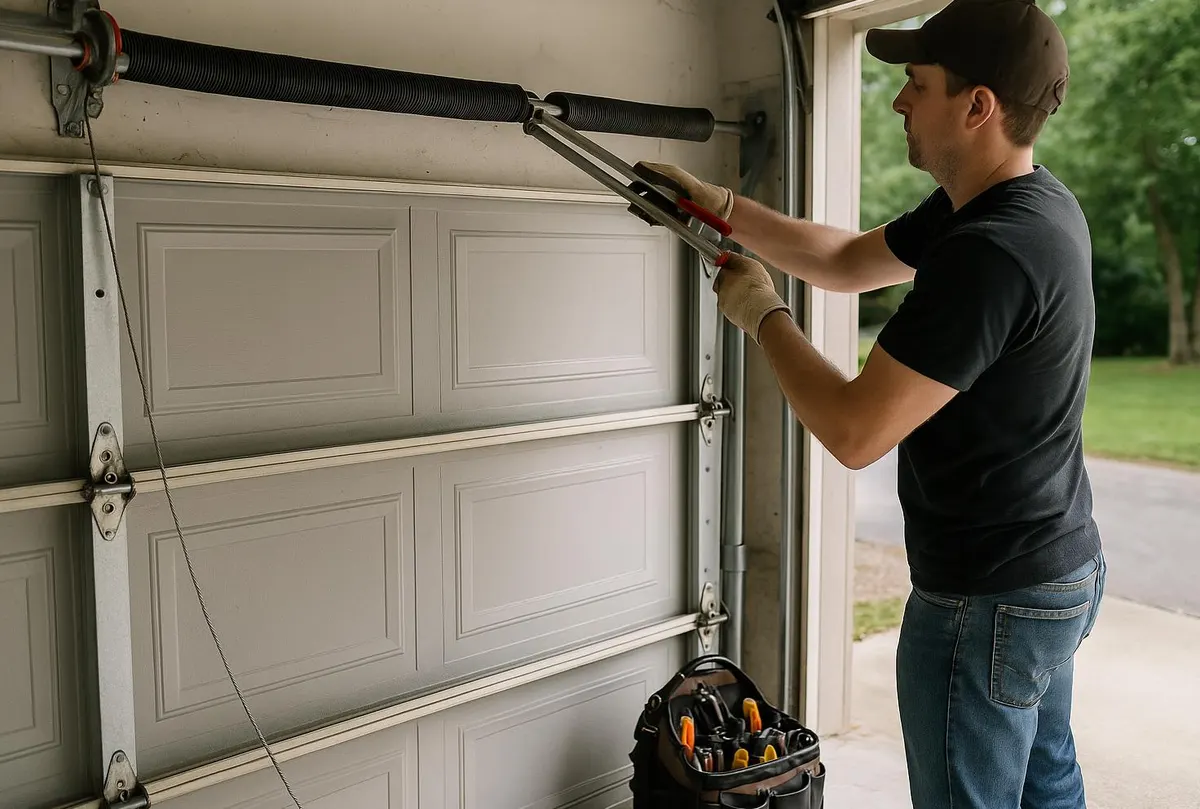
Springs under tension are already working hard every time the door opens and closes. Humidity and rust shorten their lifespan, and a weakened spring can snap under the extra stress a storm puts on the system. If you've noticed the door feels heavier than usual, closes unevenly, or makes a loud bang when operating, get the springs inspected before storm activity picks up, not after.
Bracing and Reinforcement
If your door doesn't already have horizontal or vertical bracing built in, reinforcement kits exist to stiffen panels against wind pressure. These typically run from the low hundreds to several hundred dollars depending on door size and materials — a modest cost next to the cost of water intrusion, roof damage, or a full door replacement after a storm tears one off its tracks.
Weatherstripping and Seals
Check the rubber seal along the bottom and sides of the door. Cracked or compressed weatherstripping lets wind-driven rain in during heavy downpours, and over a wet season that moisture works its way into the garage floor, stored items, and sometimes framing.
The Opener Matters Too
Power outages are common during and after severe storms. A garage door opener with battery backup lets you open and close the door manually or electrically even when the grid is down, which matters if you need to move a vehicle or secure the garage before conditions worsen. If your current opener is older and doesn't have backup power, it's worth upgrading before storm season peaks rather than discovering the gap mid-outage.
It's also worth knowing where your manual release cord is and how to use it. If the opener loses power while the door is open, you'll need to pull the door down and lock it manually to keep wind out.
When to Call Lake Wales Garage Door
If you've spotted rust on the tracks, a door that doesn't seal tightly at the bottom, springs that look stretched or corroded, or you're simply not sure whether your door meets current wind-load expectations, that's the point to call in a technician rather than guess. Our garage door maintenance service covers a full inspection of springs, tracks, rollers, and seals, and catches the small issues — a loose track bolt, a worn roller, a cracked seal — before they become storm-day failures. If your door needs reinforcement or you're due for a wind-rated replacement, our garage door installation team can walk you through options sized for your opening and your home.
We also run emergency garage door service for homeowners who get caught off guard by a door that won't close, a spring that snaps, or storm damage that needs an immediate fix.
Get Ready Before the Next Watch Goes Up
Storm season doesn't wait for a convenient weekend, and neither should your garage door inspection. If you're in Lake Wales, Winter Haven, Haines City, Bartow, Auburndale, Dundee, Frostproof, or Eagle Lake and want your garage door checked, reinforced, or repaired before the next system develops, call Lake Wales Garage Door today and get it handled right.